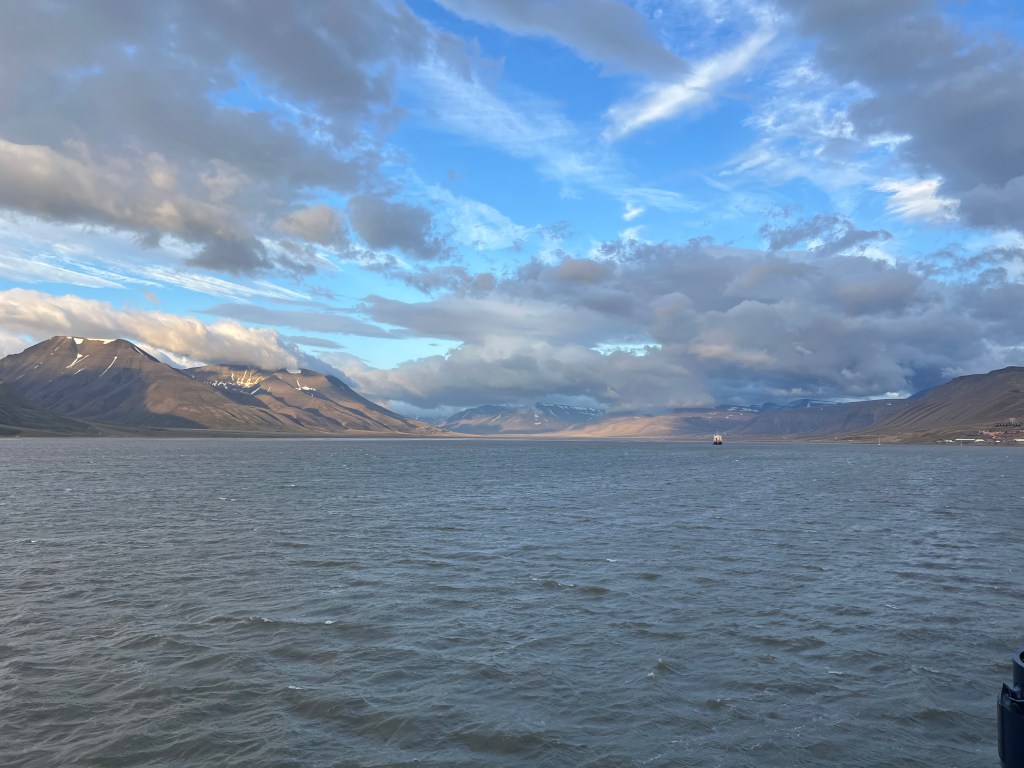
Our PhD student Nina is currently onboard the Swedish Icebreaker Oden as part of the Early Career Scientist program at the Canada-Sweden Arctic Ocean Expedition 2025. She will not only collect many key samples for her projects on novel diversity important to better understand the origin of plastids, but also rare and valuable samples for other ongoing projects in the lab. Here is a photo taken by Nina as they leave land off the coast of Svalbard.
In this new OA paper, we describe a new species of photosynthetic Paulinella, only the 4th of the genus, from a brackish beach near beautiful Vancouver (Canada). This paper is part of our ERC-funded project PlastidOrigin. The next steps here will be to obtain a better picture of the diversity of heterotrophic sister lineages by using cultures and molecular/genomic studies. Stay tuned.
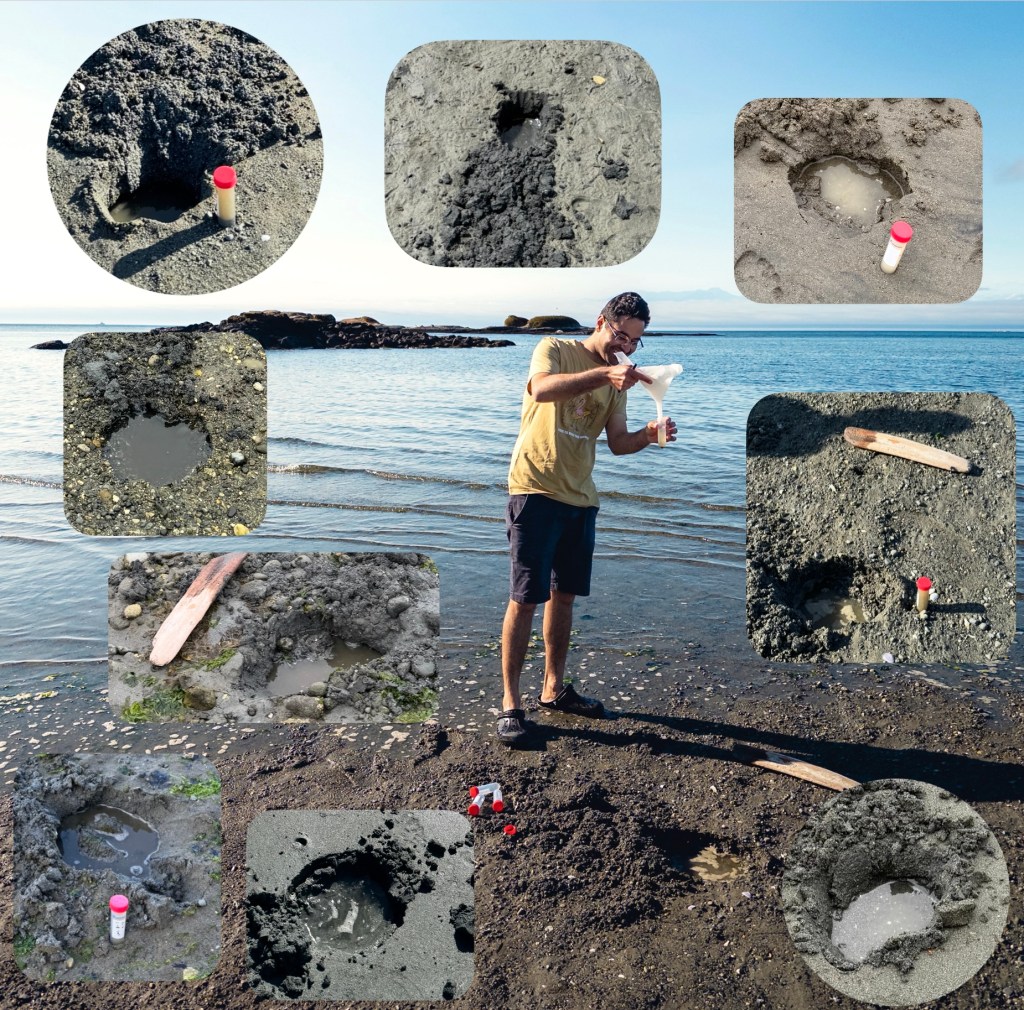
When sampling involves digging holes in the sand. Yash and Fabien are traveling around BC in search of elusive heterotrophic Paulinella species, as part of the ERC-supported project PlastidOrigin.
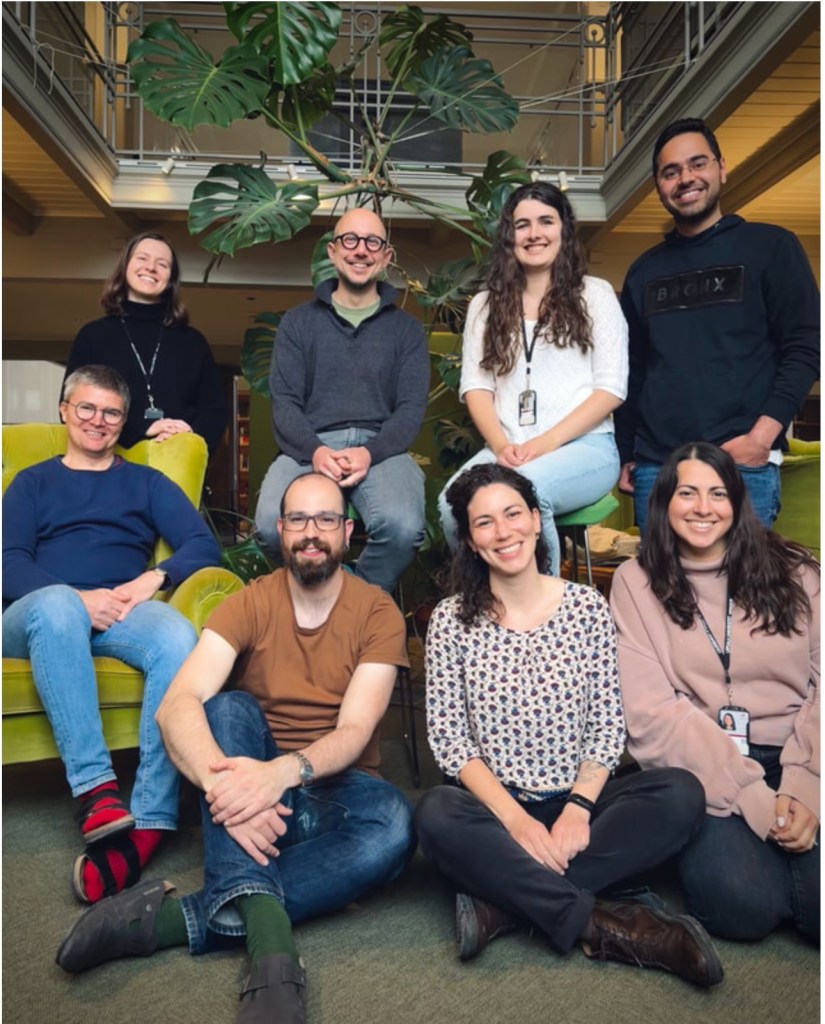
It’s already been a couple of months, but we are super happy to welcome Arina to the lab. She will work on subcellular resolution proteomics of red algae and glaucophytes, supported by our ERC Consolidator grant PlastidOrigin
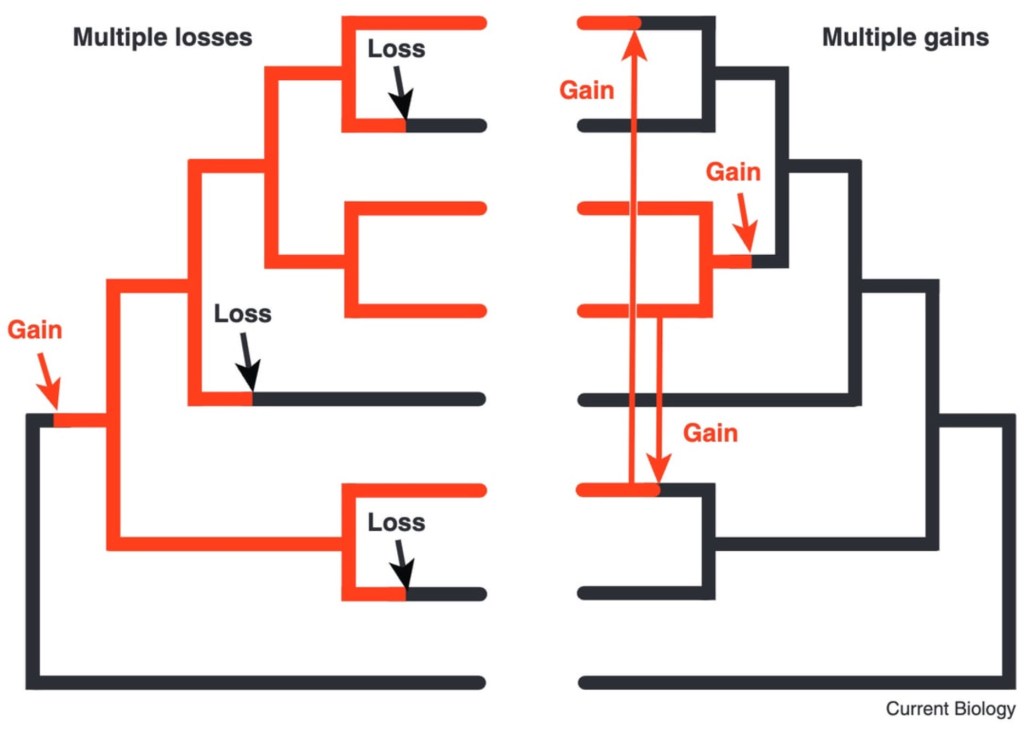
We are very happy to have been involved in this paper, which described the importance of sequencing more genomes of protists for enhancing our understanding of all eukaryotic molecular and cell biology, ecology, and evolution.
Patrick Keeling and Fabien Burki wrote a commentary on this excellent paper describing the mechanism of protein import in the complex plastids of dinoflagellate kareniaceans.
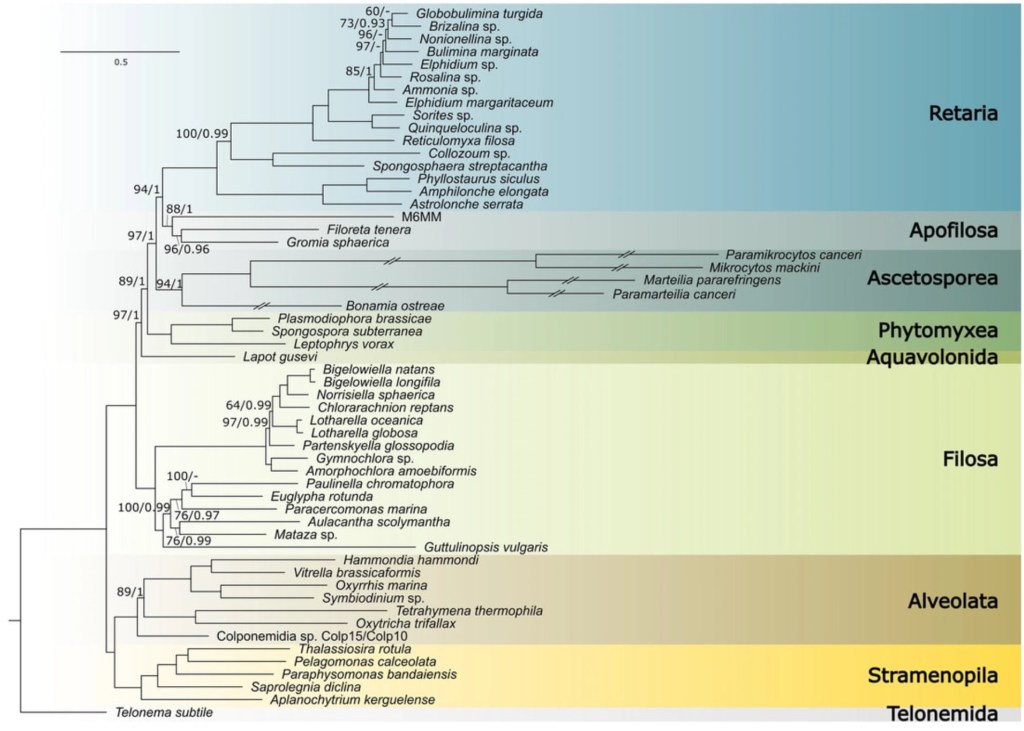
We have just published a comparative genomic analyses of Ascetosporea parasites, including new genome data for Bonamia ostreae (Haplosporida), Marteilia pararefringens and Paramarteilia canceri (Paramyxida), and that of the undescribed Cercozoa sp. strain M6MM. We supplemented these new data with the genomes of Mikrocytos mackini, and Paramikrocytos canceri. Using this dataset, we carried out a comprehensive phylogenomic analysis of Rhizaria and show that Ascetosporean genomes have undergone functional reduction, primarily in metabolic pathways, and expansions in gene families encoding proteases and transporters. Together, our results present important new genomic information from a lineage of enigmatic parasites, shedding new light on the free-living to parasite evolutionary transition in Rhizaria.
Fabien received a sabbatical grant from the Science Faculty (Uppsala University) for a 3-months visit–a minibatical?–to Patrick Keeling’s lab at the University of British Columbia (UBC). Plenty of sampling trips in the pipeline and time in the lab. Very grateful for the opportunity!



 News
News 