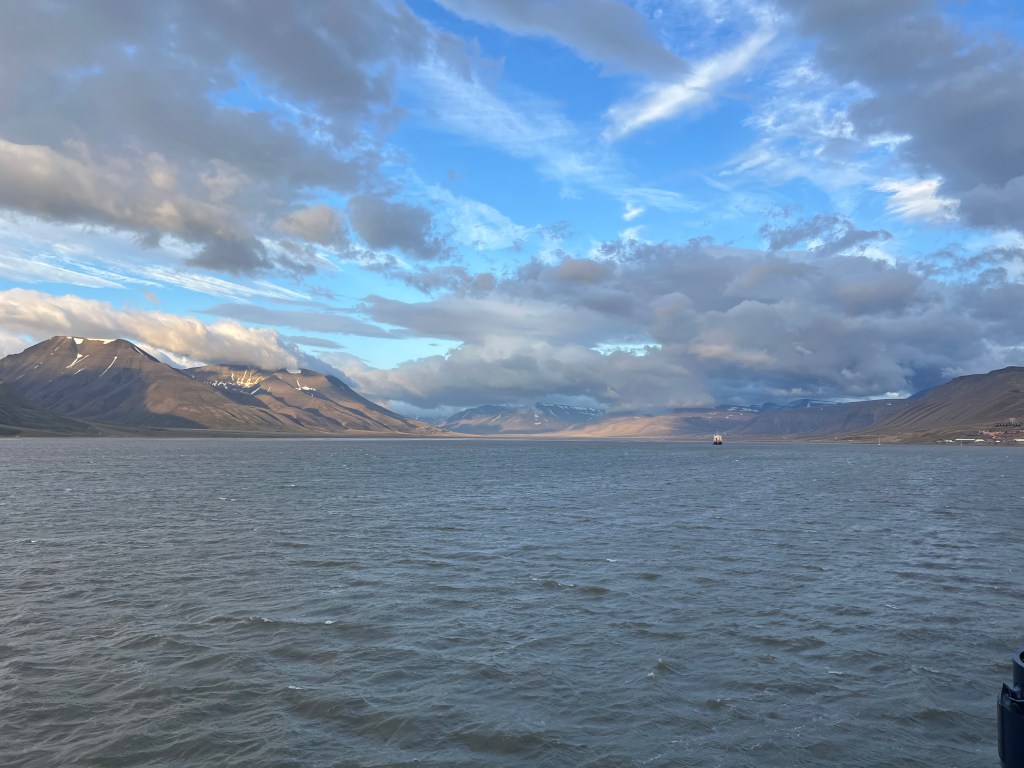
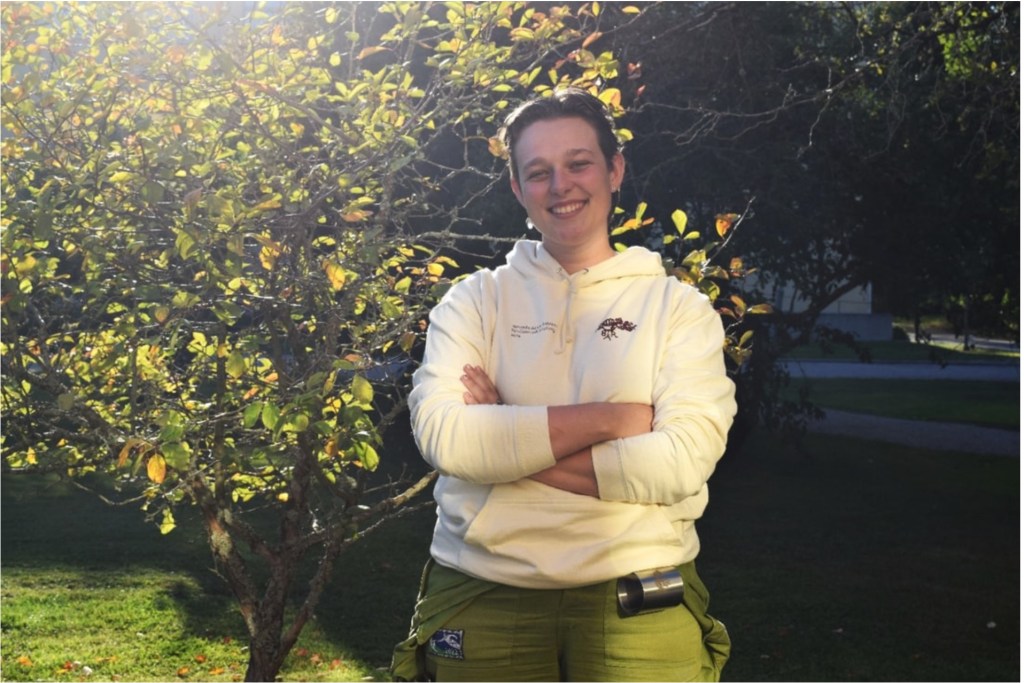
Our PhD student Nina is currently onboard the Swedish Icebreaker Oden as part of the Early Career Scientist program at the Canada-Sweden Arctic Ocean Expedition 2025. She will not only collect many key samples for her projects on novel diversity important to better understand the origin of plastids, but also rare and valuable samples for other ongoing projects in the lab. Here is a photo taken by Nina as they leave land off the coast of Svalbard.
In this new OA paper, we describe a new species of photosynthetic Paulinella, only the 4th of the genus, from a brackish beach near beautiful Vancouver (Canada). This paper is part of our ERC-funded project PlastidOrigin. The next steps here will be to obtain a better picture of the diversity of heterotrophic sister lineages by using cultures and molecular/genomic studies. Stay tuned.
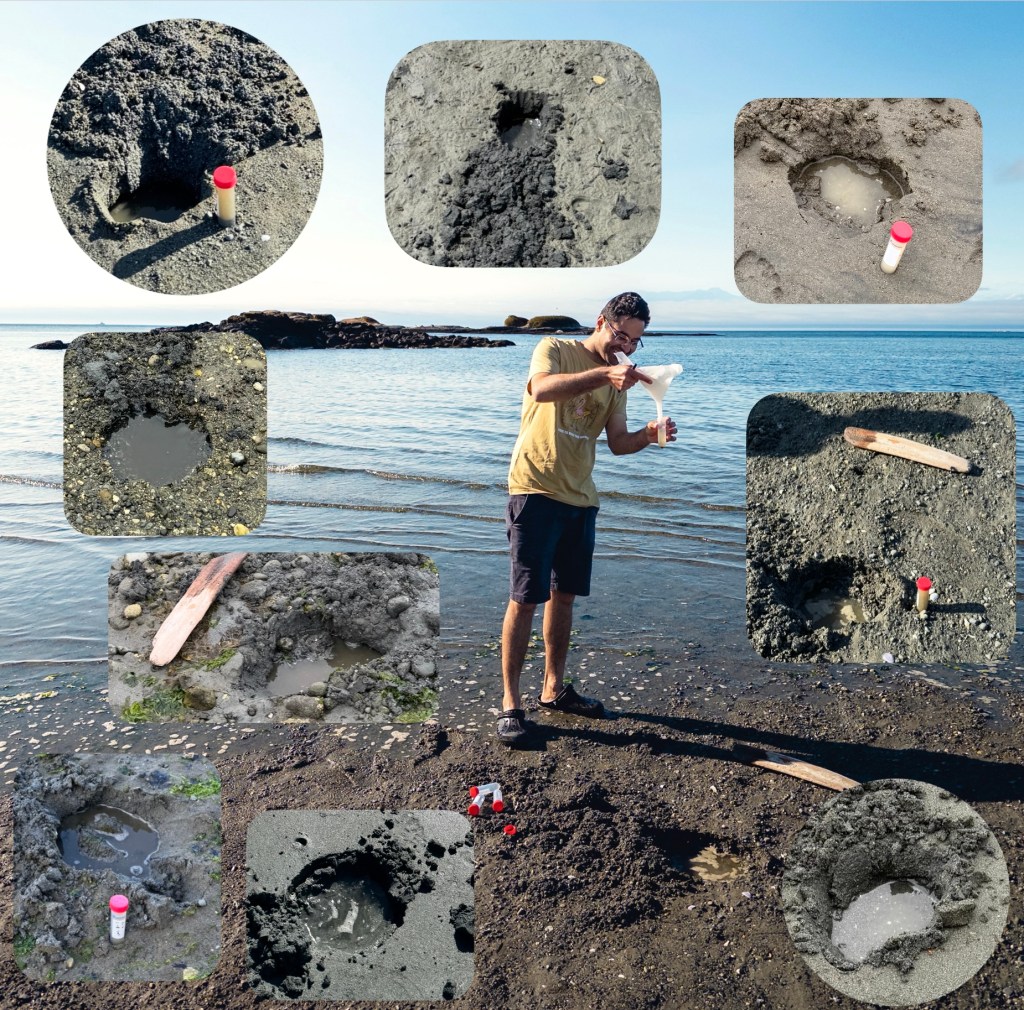
When sampling involves digging holes in the sand. Yash and Fabien are traveling around BC in search of elusive heterotrophic Paulinella species, as part of the ERC-supported project PlastidOrigin.
It’s already been a couple of months, but we are super happy to welcome Arina to the lab. She will work on subcellular resolution proteomics of red algae and glaucophytes, supported by our ERC Consolidator grant PlastidOrigin
We are very happy to have been involved in this paper, which described the importance of sequencing more genomes of protists for enhancing our understanding of all eukaryotic molecular and cell biology, ecology, and evolution.
Patrick Keeling and Fabien Burki wrote a commentary on this excellent paper describing the mechanism of protein import in the complex plastids of dinoflagellate kareniaceans.
We are very excited about the release of this story.
New deep-branching environmental plastid genomes on the algal tree of life
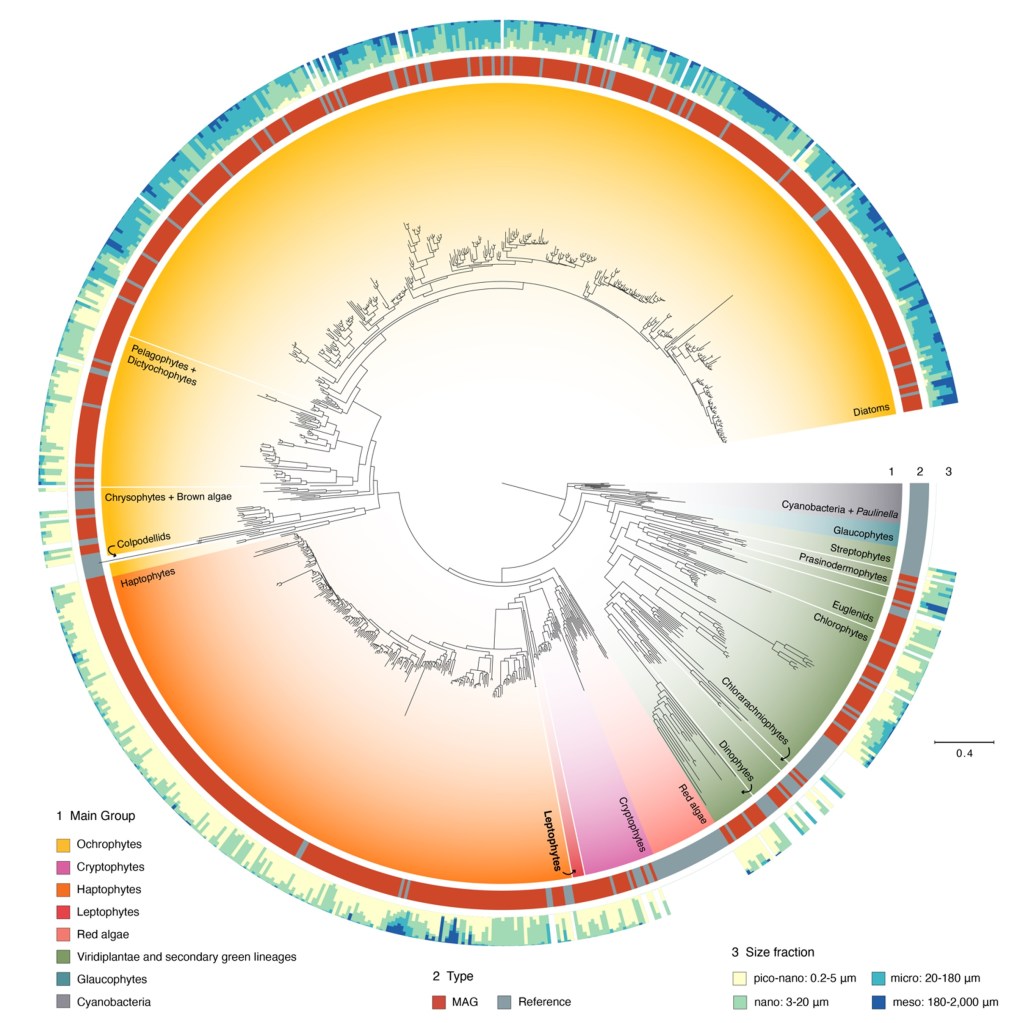
Marine algae support the entire ocean ecosystem and greatly impact planetary biology. The availability of algae in culture poorly represents their large environmental diversity, and we still have a limited understanding of their convoluted evolution by endosymbiosis. Here, we performed a phylogeny-guided plastid genome-resolved metagenomic survey of Tara Oceans expeditions. We present a manually curated resource of nearly 700 new non-redundant plastid genomes of environmental pelagic algae. This catalogue vastly expands the plastid genome diversity within major algal groups, often corresponding to algae without closely related reference genomes. We also recovered four genomes, including one near complete, forming a deep-branching plastid lineage of nano-size algae (<5 μm) that we informally named leptophytes. This group is globally distributed and generally rare, although it can reach relatively high abundance notably in the Arctic. Leptophytes encompass the enigmatic marine plastid group DPL-2, one of the very few known plastid groups not clearly belonging to any major algal groups and for which only 16S amplicon data is available. Extensive phylogenetic analyses based on 93 plastid genes and gene content comparison firmly place leptophytes together with haptophytes and cryptophytes, although the exact relationships remain ambiguous. Collectively, our study demonstrates that metagenomics can reveal currently hidden diversity of organellar genomes, and shows the importance of including this diversity to improve models for plastid evolution.
Jamy, M., Huber, T., Antoine, T., Ruscheweyh, H.-J., Paoli, L., Pelletier, E., Delmont, T.O., and Burki, F. (2025). bioRxiv, 2025.01.16.633336. https://doi.org/10.1101/2025.01.16.633336.
View from the lab at the Hakai research station on Calvert Island (British Columbia, Canada). During his short sabbatical, Fabien had the opportunity to visit this remote research station in the wilderness of beautiful British Columbia. Besides successful science, this was an incredible experience. Fresh cells from this channel everyday!
We’ve just had an incredible stretch of good BBQ weather, which was turned into a small celebration for Anne’s PhD half-time presentation. She did a strong act presenting her accomplishments and future work on the symbiosis in Meringosphaera. A special thank to the opponent Anna Karnkowska, from the University of Warsaw, for her insightful comments and suggestions.





 News
News 